

Art has always been my way of navigating the world, of slowing down long enough to notice the subtle shifts in light, the textures that anchor a memory, or the quiet presence of a moment most people rush past. Over the years, my creative practice has changed in form and technique, but the heart of it remains the same: I paint to explore the unseen, the in-between, and the emotional truths that sit beneath the surface of everyday life.
When people encounter my work for the first time, they often ask what inspires a particular piece, or why I gravitate toward certain colors and forms. The honest answer is that my paintings rarely begin with a clear destination. They usually grow out of an instinct - an image, a fragment of a story, a feeling I can’t quite articulate yet. I like to think of each canvas as a conversation. Sometimes it’s lively and energetic; sometimes it’s quiet and meditative. But it’s always a dialogue between intention and discovery.
Where Ideas Begin
A lot of my work starts long before I ever touch a brush. I’m constantly collecting impressions: the way sunlight hits weathered metal, how a broken line can imply movement, or how a small detail can shift the emotional temperature of a scene. I keep notebooks filled with sketches, color palettes, and short phrases that capture something I want to remember later. These fragments eventually come together in ways I don’t expect. I’ll flip through an old sketchbook and suddenly a composition clicks, or a palette I set aside months ago becomes the perfect entry point into a new piece.
This process has taught me to value the quiet work that happens when I’m not actively painting. Creativity doesn’t switch on only when I’m in the studio, it’s always humming in the background.
Working Through the Layers
I tend to work in layers, letting each stage of the process inform the next. Sometimes the underpainting becomes a ghost that subtly guides the final image. Other times, I sand back entire sections to reveal textures I didn’t know I needed. That’s part of the thrill: the moment when the painting starts asserting its own identity. When the piece pushes back, I know I’m on the right track.
There’s a vulnerability in allowing a painting to evolve on its own terms. It means accepting that not everything can—or should—be controlled. But that’s also where the most meaningful discoveries happen. The layers are a record of decisions, revisions, and intuition. They’re the parts of the story that don’t always make it into the final image, but they shape it all the same.

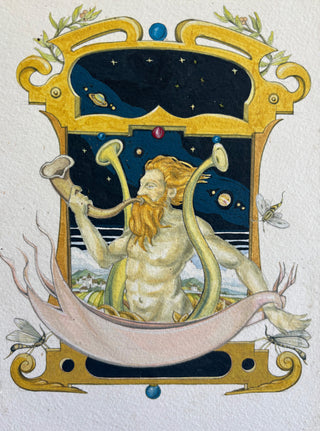
Fairest of the Fair - Print, Paul Reeb
Connecting With Viewers
One of the most rewarding parts of being an artist is hearing how others interpret my work. People bring their own histories, emotions, and perspectives, and they often find meanings I never anticipated. I don’t believe art needs a single “correct” interpretation. If a painting resonates with someone, if it stirs a memory, a feeling, or even a question, then it has done something valuable.
In many ways, I see my art as an invitation. Not to explain everything, but to leave space for reflection and discovery. My goal is not to deliver a message but to spark a moment of connection.
Looking Ahead
As I continue developing new work, I’m focusing on deepening that sense of connection - exploring how color, texture, and composition can create more immersive experiences. I want each piece to hold a presence that lingers, the way a powerful song or unexpected encounter stays with you long after it ends.
Thank you for taking the time to explore my work and follow my creative journey. I’m excited to share more pieces, insights, and studio updates here on the blog. I hope you’ll keep joining me as I peel back the layers, discover new directions, and continue shaping the visual language that defines my art.